
An equipment quotation answers a purchasing question: what can be supplied, for how much, and when?
A replacement scope answers a different question: what must be checked, changed and demonstrated before the machine returns to service?
Treating those as the same document leaves the difficult decisions until the shutdown.
Start with the difference, not the part number
A matching power rating is a starting point, not a completed replacement assessment. Motor requirements, installation conditions and control-system interfaces still need model-specific review. Rockwell Automation's PowerFlex 755-to-755TS migration guide separately addresses option modules, configuration tools, parameters, Ethernet and datalinks. Its structure makes the distinction useful: a replacement is more than a catalogue selection.
Motor type also matters to configuration. For example, Schneider Electric documents separate synchronous and asynchronous motor settings for the ATV320. That is a model-specific example—not a universal setup instruction.
Put one extra page beside the quotation
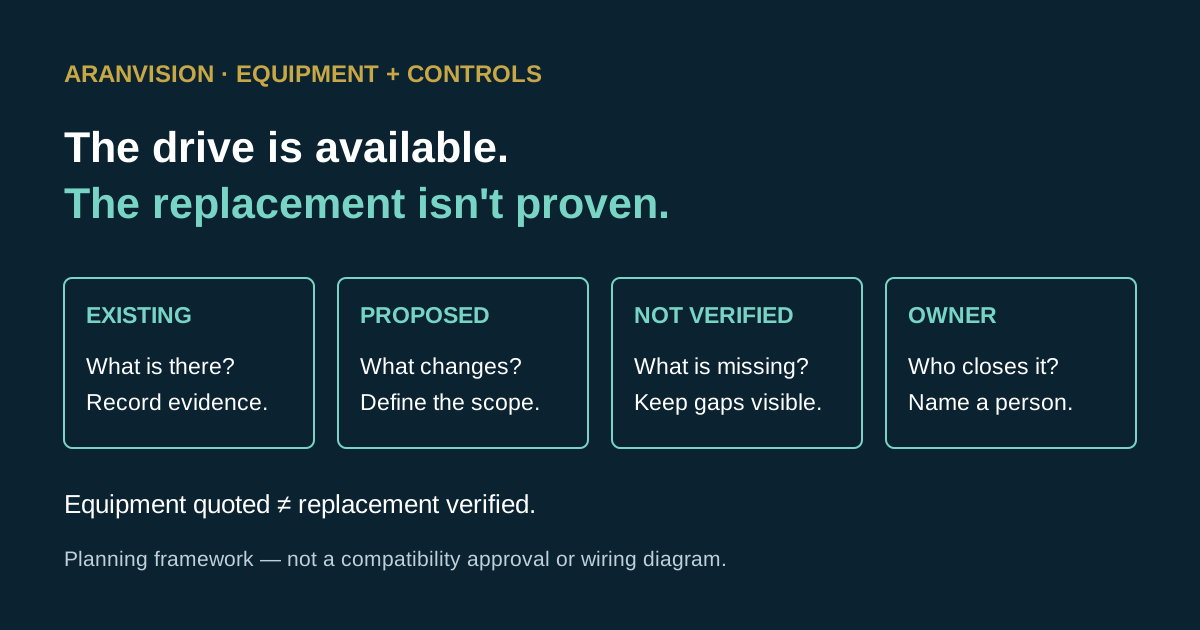
Our proposed replacement delta sheet records four things for each boundary: what exists, what is proposed, what remains unverified, and who owns closing the gap.
This is a proposed project-planning tool, not a compatibility certificate or a substitute for manufacturer instructions.
- Power and installation — Does the proposed equipment suit this motor, duty and installation? Request exact catalogue references, motor data and relevant manufacturer guidance.
- Control and communication — Which existing commands, feedback and configuration must be preserved or adapted? Request current configuration, interface documentation and an agreed comparison.
- Safety-related functions — What functions are involved, and who is qualified to assess and validate the change? Identify the responsible reviewer and applicable safety documentation.
- Handover — What will count as acceptance, and what happens if it cannot be achieved? Agree the test scope, responsibility, records and recovery plan.
“Not verified” is a useful quotation outcome
Consider an illustrative procurement scenario: a supplier has an available candidate, but the current drive configuration is missing. No actual customer incident is being described.
The useful next step is not to promise a drop-in replacement. It is to separate the available equipment from the unverified integration work. The quote can identify the candidate while stating that compatibility review remains open, what information is needed, and who will provide it.
That gives the buyer a real decision: proceed with the documented assessment, recover the missing information, or choose another route. It also prevents “equipment delivered” from being confused with “machine accepted.”
Use the blank replacement delta sheet
Start with the project reference and date, exact existing and proposed catalogue references, application, reason for replacement and required change window. For each review boundary, record the existing and proposed document references, the gap or evidence still needed, and the responsible person and due date.
Keep the commercial boundary explicit: equipment supply included; technical review, configuration, installation and validation included; exclusions and assumptions; and open decisions preventing compatibility confirmation. Name the technical selection owner and the changeover and acceptance owners.
Use an honest status: not reviewed, review in progress, further evidence required, or review outcome documented. Record the actual review outcome and its authorizing document separately. A completed form does not certify compatibility, authorize energization or replace model-specific instructions, qualified assessment or the site's change-control process. Do not include passwords, access credentials or unnecessary confidential plant information.
- Motor, load and duty.
- Supply and installation conditions.
- Physical fit and environment.
- Commands and control interface.
- Feedback, communications and configuration.
- Safety-related functions and qualified reviewer.
- Configuration backup and recovery approach.
- Acceptance criteria and handover records.
Give the handover an owner
Before committing to the changeover, name who will approve the technical selection, prepare the configuration, perform the authorized work and accept the result. Keep those responsibilities explicit even when one organization handles several of them.
For an initial conversation with AranVision, share the existing model, the proposed replacement if known, the application and the required date. We can discuss equipment sourcing and the scope of controls support needed. Send only information you are authorized to share—no credentials or confidential plant files.
Planning information only. Installation, electrical work and safety validation require appropriately qualified personnel and the applicable manufacturer procedures. No parameter values, wiring changes or safety bypasses are prescribed here.
References checked 23 September 2026, Toronto. AranVision's delta-sheet format is original editorial guidance, not a manufacturer-prescribed form. No affiliation or authorized-partner status is claimed.
Official and reference sources
The links below support the source facts discussed in this guide. Product claims and event details remain the responsibility of the referenced publisher; confirm current information at the source.
- Rockwell Automation: PowerFlex 755 to PowerFlex 755TS Migration Guide, 750-RM102A-EN-P, April 2024 — replacement considerations and configuration chapters; model-specific, not a universal cross-reference ↗
- Schneider Electric: ATV320 synchronous/asynchronous motor information, FAQ FA373404 — model-specific configuration example ↗
Use the guide inside an approved work process
This guide supports planning and technical review; it does not authorize a change to live equipment. Before applying it, identify the system owner, production boundary, electrical and machine hazards, required permits, current backups and the person authorized to approve testing. Keep confirmed evidence separate from assumptions, and record any temporary simulation, force, inhibit or workaround under the site’s approved method.
If the installed condition does not match the available drawings or software, preserve the discrepancy and resolve ownership before downloading, energizing or bypassing a protective function. Final acceptance should reference the actual as-left configuration, executed test evidence, open actions and responsible approver.
Planning a related controls project?